
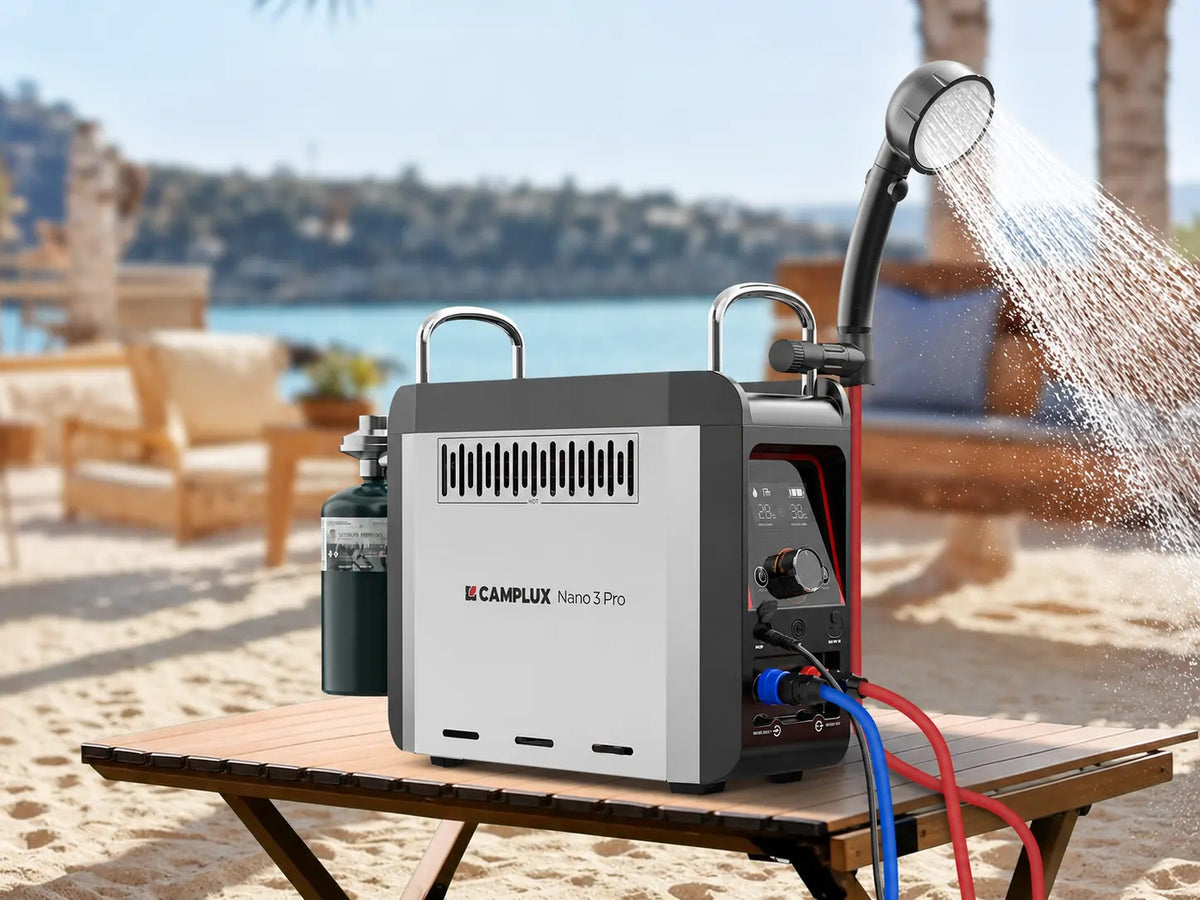
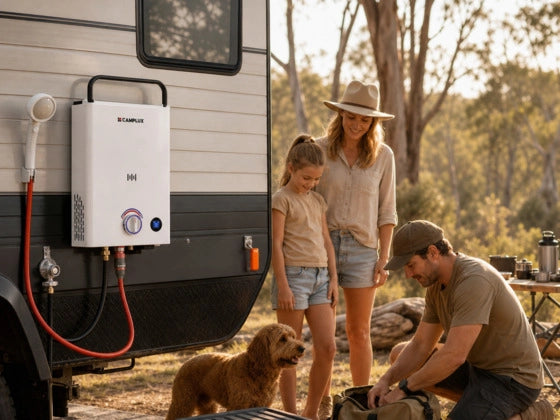
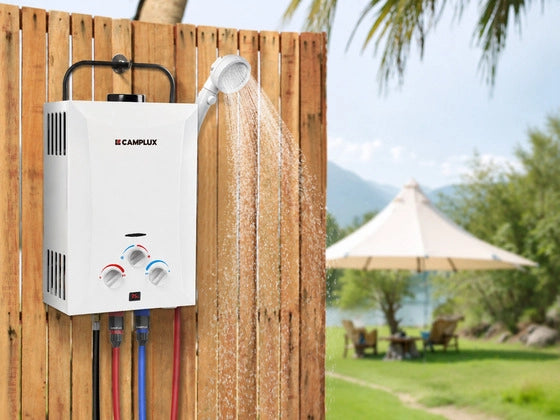
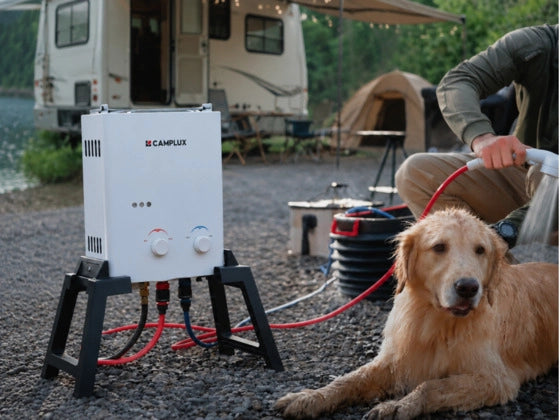
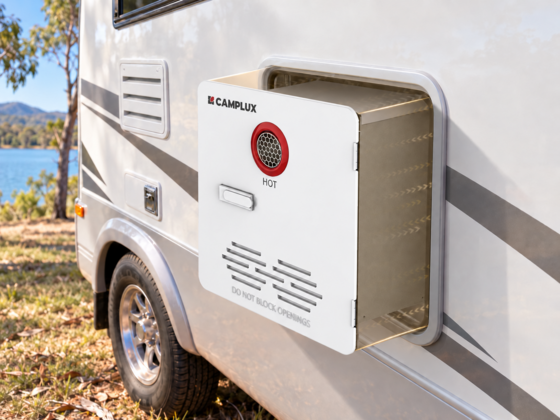
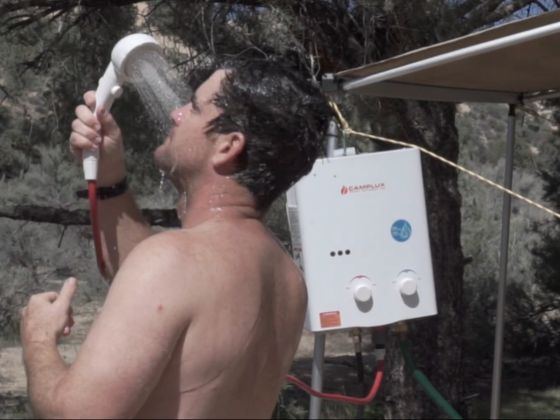
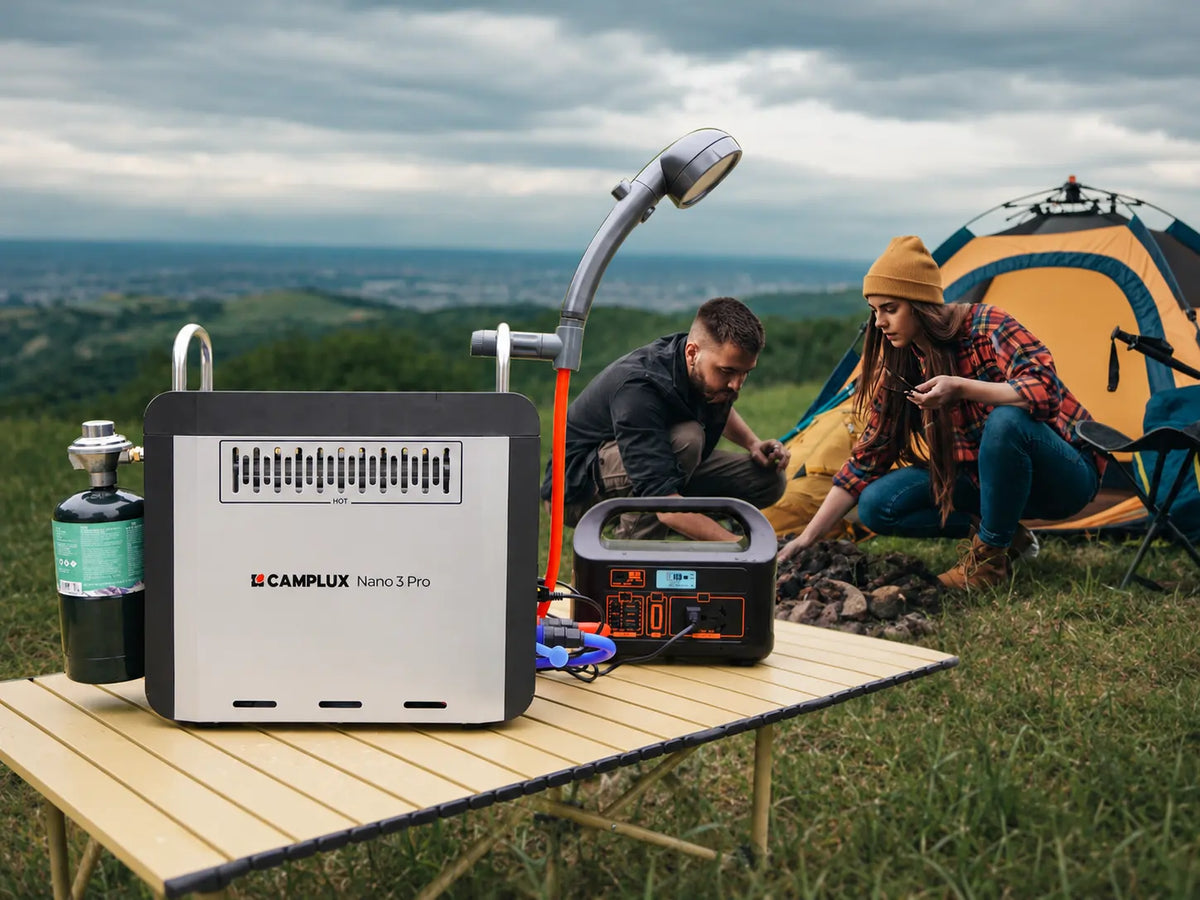
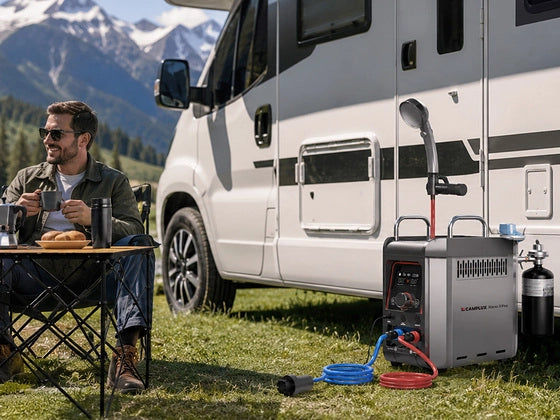
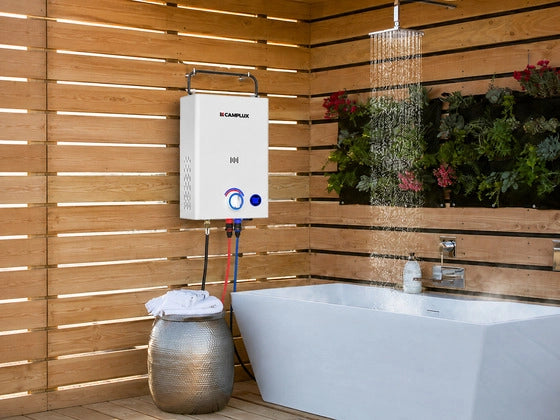
The best portable gas water heaters for Australian camping trips in 2026 run on LPG, deliver 6–10 litres per minute of hot water, and weigh under 4 kg for easy transport. Models from Camplux consistently appear at the top of shortlists for reliability, safety certifications, and value for money across weekend campers and extended 4WD tourers alike.
So what actually separates a decent unit from one you'll regret buying mid-trip in the Snowy Mountains? Mostly three things: flow rate, ignition reliability in cold weather, and whether the unit carries proper Australian compliance markings. Get those wrong and no amount of sleek design fixes it.
A common decision concern is whether a portable unit can genuinely replace the hot shower experience at home. Short answer: a well-specced 8L/min gas heater at moderate water pressure absolutely can. You'll find Camplux's full range of portable hot water systems covers most use cases from solo hiking setups to family campsite rigs.
Already comparing specific models? Jump straight to the comparison table below. Otherwise, read through the buyer framework first — it'll save you from a return.
Key Benefits of Portable Gas Water Heaters for Camping
Portable gas water heaters solve a real problem. No campsite hot water hookup, no problem. A compact LPG-powered unit gives you a genuine hot shower wherever you've pitched your tent — whether that's a managed caravan park in Queensland or a remote bush camp three hours from the nearest town.
The core advantage over electric alternatives is independence from the grid. Gas heaters fire up instantly. No tank to preheat, no wait time. Flow rates on quality units typically sit between 6 and 10 litres per minute, which is enough for a satisfying shower at normal showerhead pressure. Battery-ignited models remove the need for a pilot flame entirely, so setup takes under two minutes.
Weight matters on camping trips. The best units in this class land between 2.5 and 3.8 kg without the gas cylinder — genuinely portable, not just "technically moveable." Most come with a carry bag, wall-mount bracket, and shower hose included, which matters when you're trying to fit everything into an already-packed ute.
Based on real-world use across Australian conditions, battery ignition and an oxygen depletion sensor (ODS) are the two features that most directly affect safety and usability outdoors. The ODS shuts the unit down automatically if oxygen drops too low — non-negotiable for enclosed shower tents or camp shower enclosures. Don't skip that feature to save $30.
Top Portable Gas Water Heaters Compared: 2026 Shortlist
Three models consistently come up in Australian buyer research for 2026: the Camplux 5L Portable, the Camplux 10L Outdoor, and the Camplux Pro 8L. Each targets a slightly different buyer. Here's the side-by-side breakdown.
| Feature | Camplux 5L Portable | Camplux Pro 8L | Camplux 10L Outdoor |
|---|---|---|---|
| Flow Rate | 5 L/min | 8 L/min | 10 L/min |
| Ignition Type | Battery (2× D-cell) | Battery (2× D-cell) | Battery (2× D-cell) |
| Weight (unit only) | ~2.6 kg | ~3.2 kg | ~3.8 kg |
| Gas Type | LPG (propane/butane) | LPG (propane/butane) | LPG (propane/butane) |
| Approx. AU Retail Price | ~AU$80–$120 | ~AU$140–$180 | ~AU$190–$250 |
| ODS Safety Sensor | Yes | Yes | Yes |
| Best For | Solo / couple camping | Family weekend trips | Extended touring / larger groups |
| Carry Bag Included | Yes | Yes | Yes |
| Warranty | 1 year (verify with Camplux AU) | 1 year (verify with Camplux AU) | 1 year (verify with Camplux AU) |
Prices shown reflect typical AU retail ranges as of mid-2026. Always confirm current pricing directly. If you're weighing the Pro 8L against the 10L, the 8L wins on portability; the 10L wins if you've got four or more people showering every morning. If you'd like to check the latest pricing across the range, the Camplux Australia store lists current availability and any active promotions — it's worth a look before committing to a purchase based on cached prices elsewhere.
Check latest price — the Camplux AU store reflects real-time stock and pricing, which third-party listings often don't.
Who Is This For?
Buyers evaluating portable gas water heaters for camping generally fall into a few clear groups. Solo overlanders and couples doing weekend bush camping are the primary audience for the 5L class — light, cheap, and genuinely enough water flow for a quick outdoor rinse. No need to overspend.
Families running a 10-to-14-day 4WD trip through the Kimberley or along the Gibb River Road are a different story. You need higher flow, better temperature stability, and enough durability to handle daily use for two weeks straight. The 10L class is built for that scenario. The unit runs harder, but it's also designed to.
There's also a growing segment of buyers who use portable gas heaters at fixed semi-permanent setups: farm sheds, shearing quarters, weekender cabins without mains gas. For those applications, a wall-mounted portable unit fed by a 9 kg LPG cylinder runs long enough between refills that it functions almost like a permanent system.
One risk to check before buying: if you plan to use the heater inside any enclosed structure, confirm the unit has adequate ventilation clearances and an ODS fitted. Australian safety standards for gas appliances require specific clearances around gas-fired equipment. A portable camping unit is not designed as a permanent indoor installation — that distinction matters for both safety and warranty coverage.
How to Choose the Right Option
Flow rate is the first filter. A 5L/min unit at a standard low-pressure camping shower nozzle gives a decent rinse. Go to 8L/min and it feels much closer to a home shower. If temperature consistency matters to you — and it will in winter camping — look at units with adjustable temperature dials rather than just a flame-height knob.
Gas cylinder compatibility is something buyers often evaluate too late. Most portable camping heaters in Australia connect via a standard POL or Type 21 LPG fitting, but confirm this before buying if you already own cylinders. Adapters exist, but adding hose adapters to a gas line on a camping trip is not ideal practice.
For winter trips specifically, the spec that catches people out is minimum activation water pressure. Some units won't ignite below 0.3 bar inlet pressure — and if your campsite pump runs soft, or you're gravity-feeding from a tank, that's a problem you don't want to discover in the dark. Most Camplux units activate at 0.3–0.4 bar, which works with most portable 12V camping pumps.
(Quick tip: a 12V submersible pump rated at 35 PSI and a standard garden hose is enough to run most 6–8L portable gas heaters reliably off a 20-litre jerry can.)
Does a Portable Gas Water Heater Work in Cold Australian Conditions?
Yes — with caveats. Portable LPG heaters perform well down to around 5°C ambient temperature on standard propane/butane blends. Below that, butane-heavy blends start losing pressure in the cylinder, which affects flame consistency. In alpine areas of Victoria or NSW during winter, this is a real consideration, not a theoretical one.
The practical fix is using a propane-dominant blend or a pure propane cylinder in cold conditions. Propane maintains vapour pressure down to around -42°C, so it's the right choice for Snowy Mountains camping in June or July. Standard camping gas canisters sold at Bunnings and BCF tend to be butane-dominant — fine for autumn and spring, less reliable for July in the highlands.
Temperature rise is the other cold-weather factor. At 10°C inlet water temperature and a flow rate of 8L/min, a mid-range gas heater delivers approximately a 20–25°C temperature rise, putting output around 30–35°C. That's a comfortable warm shower, not a hot one. Want genuinely hot water in cold conditions? Dial the flow rate back a little. Most units make that easy.
After testing several options across different ambient temperature scenarios, the units with manual temperature dials give you more control than pure flame-adjustment models in variable outdoor conditions. That fine-tuning ability matters more than most buyers anticipate until they're standing outside a shower tent at 7°C trying to adjust a single gas valve by feel.
Australian Compliance and Safety Certifications: What to Check
This is actually a common point of confusion for buyers new to gas appliances. Not every gas product sold in Australia carries the same compliance level. For portable camping gas heaters, the key marker is whether the unit has been assessed against relevant Australian Gas Association (AGA) or equivalent approval standards for LPG appliances.
The Energy Safe Victoria regulatory body — along with equivalent state regulators — provides guidance on compliant gas appliance requirements. For permanently installed gas water heaters, WaterMark certification and compliance with AS/NZS 5601 (gas installations) apply. Portable camping units occupy a slightly different regulatory space, but responsible manufacturers still submit their products for testing and provide compliance documentation on request.
Here's what most reviews gloss over: there's a real difference between a product "designed to comply" and one that actually has documented test reports to back it up. When in doubt, ask the supplier directly. Camplux's Australian customer support can provide compliance documentation for their range — and frankly, that's the bar you should hold any gas appliance supplier to.
MEPS (Minimum Energy Performance Standards) and GEMS (Greenhouse and Energy Minimum Standards) requirements apply primarily to mains-connected and permanently installed water heaters in Australia. Portable camping units are generally outside the GEMS registration scope, but buyers purchasing for semi-permanent setups should confirm the current regulatory position with their state gas regulator before installation.
Setup, Day-to-Day Use, and What Buyers Often Miss
Setup is genuinely simple. Connect the gas regulator to your LPG cylinder, attach the inlet hose to your water source, connect the shower hose to the outlet, install two D-cell batteries, and you're running. First-time setup takes about 10 minutes. After that, it's under two minutes per trip.
In practice, the biggest variable is water source pressure. Gravity-fed setups from an elevated tank work fine above about 1.5 metres of head pressure for most units. Below that, you'll want a pump. The 12V pump option pairs cleanly with most camper trailer and caravan setups already running a 12V battery system.
Gas consumption is something most buyers never bother calculating before their first extended trip — and then it bites them. A typical 8L/min unit running at moderate flame burns through approximately 180–220 grams of LPG per 10-minute shower. A standard 9 kg cylinder gives you roughly 40–50 showers at that rate, which means a family of four on a two-week trip will chew through one full cylinder, maybe a touch more. Plan that before you leave, not at the servo on day three.
Maintenance in the field is minimal. The main thing to watch is the inlet filter — a small mesh screen at the water inlet that catches grit and debris. On trips where you're drawing water from tanks or gravity bags, that screen can partially block within a few days. Rinse it out. It takes 30 seconds and prevents most ignition problems attributed to "the heater just stopped working."
If you're ready to look at specific units with full specs and current availability, View product details — Camplux's Australian product pages include setup guides, compatibility notes, and real customer reviews that cover exactly these day-to-day use questions.
Warranty, Returns, and Customer Support
Warranty terms vary by model and purchase channel. As a general reference point, Camplux portable heaters sold through the official Australian store carry a manufacturer's warranty — confirm the exact term and coverage at the point of purchase, as warranty periods and what's covered (parts, labour, full replacement) can differ. Always retain your proof of purchase. That's not unique to Camplux — it applies to every gas appliance brand.
Returns policy for portable gas appliances follows standard Australian Consumer Law. If a product arrives faulty or fails within a reasonable period through no fault of the user, you're entitled to a repair, replacement, or refund. The practical thing to know: gas appliances that have been connected to a cylinder and used are harder to return under change-of-mind policies. Read the returns terms before you open the box if you're still undecided.
Customer support matters more with gas appliances than with most camping gear — because troubleshooting a heater that won't ignite when you're two days from the nearest town is a different kind of stressful. Camplux's Australian customer support operates via email and phone — response times are typically within one business day for product enquiries based on published contact information. For urgent field troubleshooting, the Camplux website also carries a product FAQ and setup video library that covers the most common issues.
A practical note on warranty claims: keep photos of your installation setup if you're using the heater in a semi-permanent configuration. If something goes wrong and you need to make a claim, documented evidence of a compliant setup strengthens your case significantly.
Which One Should You Choose?
The right choice depends on how you camp, how many people are involved, and how much weight you're willing to carry.
Solo campers and couples on light trips: The Camplux 5L Portable is genuinely enough. It's light, affordable in the AU$80–$120 range, and does the job for a daily rinse. Don't pay for flow rate you won't use.
Families and groups on week-long trips: The Pro 8L is the sweet spot. It delivers a noticeably better shower experience than the 5L, handles back-to-back uses without temperature drop issues, and sits at a price point that's still reasonable. Most buyers in this category who stretch to the 10L don't regret it — but the 8L is the better value pick for four people or fewer.
Extended touring, large groups, or semi-permanent setups: The 10L is the right call. Higher flow, better performance under sustained use, and built for daily demand over weeks rather than weekends. The weight difference over the 8L is small. The performance difference at high demand isn't.
Fair question — the answer depends on whether you've used a portable gas heater before. If this is your first one, start with the 8L. It hits the performance threshold where hot showers feel genuinely satisfying, without the cost or weight of the top-tier unit. You can always upgrade; you can't un-spend the money on a 10L that turns out to be overkill for three weekends a year.
Browse the current Camplux AU range with real-time stock and pricing: Compare options — the product pages include customer reviews, spec sheets, and setup documentation that'll confirm whether each model fits your specific setup.
Frequently Asked Questions
Can I use a portable gas water heater inside a shower tent?
Only if the heater has an oxygen depletion sensor (ODS) fitted and the tent has adequate ventilation openings. An ODS automatically cuts the gas supply if combustion oxygen drops below a safe level. Without it, carbon monoxide buildup in an enclosed shower tent is a genuine risk. Always leave the base of the shower tent open or use a model explicitly rated for semi-enclosed outdoor use.
What size LPG cylinder should I bring camping for a family of four?
A 9 kg LPG cylinder gives most families four to five days of daily showers at 8–10L/min flow. For trips over a week, either carry a second cylinder or plan a resupply stop. 4 kg cylinders are more portable but limit you to roughly two days of family use. Swap cylinders at most major service stations and caravan parks along popular touring routes in Australia.
Do portable camping gas heaters work with tank water or only mains pressure?
They work with tank water, gravity bags, and pump-fed supplies — mains pressure isn't required. The key variable is minimum activation pressure, typically 0.3–0.4 bar for most Camplux units. A 12V camping pump rated at 30–35 PSI feeds these heaters reliably. Gravity bags work if your tank is elevated at least 1.5 to 2 metres above the unit's inlet. Below that height, flow can be inconsistent.
Is a portable gas water heater worth it compared to a solar camp shower?
Solar camp showers cost AU$15–$40 but depend entirely on sunlight hours and ambient temperature. In overcast conditions or winter camping, water temperature from a solar bag rarely exceeds 30°C. A gas heater delivers consistent 35–45°C water regardless of weather, time of day, or season. For anything beyond summer weekend camping, the gas heater is the more practical tool. The cost difference pays back quickly in comfort over a few trips.
What's the difference between a portable camping heater and a home tankless unit?
Home tankless (instantaneous) gas water heaters are designed for permanent installation, mains gas connection, and continuous high-pressure supply. They typically output 16–26L/min and require a licensed gas fitter for installation under AS/NZS 5601. Portable camping units are self-contained, LPG-fed, and output 5–12L/min at low pressure. They're not interchangeable. Using a home unit off a camping gas cylinder — or vice versa — creates both safety and performance problems.
How do I store a portable gas water heater between camping trips?
Disconnect the gas regulator, drain residual water from the inlet and outlet hoses, and store the unit in its carry bag in a dry location. Leaving water sitting in the heat exchanger between trips — especially over summer — accelerates internal mineral scaling, which reduces efficiency over time. A quick flush with clean water before storage is good practice if you've been drawing from tanks with high mineral content, which is common across regional Australia.


